
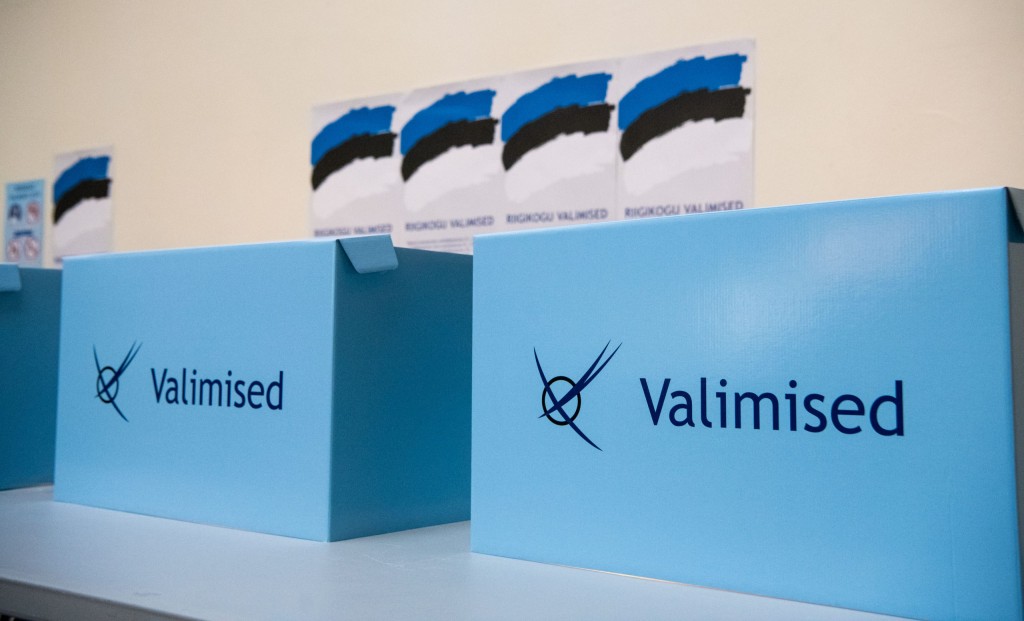
"There were a total of 448 voting districts and locations in Estonia where votes could be cast. A total of 1,500 computers, 220 printers, 650 barcode readers and also small devices were used in these locations," explained Priit Paltmann, the Elections Project Manager at Estonian IT Center (RIT), adding that the voting districts’ computers also underwent an upgrade.
"For the first time, all models and computer equipment were standardized to be the same. The State selected the devices with the aim of using them in the elections held at least in the next five years - they are of high quality and meet all security requirements and standards," said Paltmann.
Telia was responsible for on-site IT support at the voting districts. "For the elections to take place without technical difficulties, a team of 48 Telia IT specialists located all over Estonia was ready to provide operational support in the voting districts. For example, the necessary settings had to be made and users had to be advised on an ongoing basis.
The voting districts’ teams needed the help of IT specialists 55 times, but all the issues were resolved quickly and there were no major problems or failures at the voting districts," said Kristjan Kukk, Head of B2B at Telia, who added that thanks to thorough preparation, the cooperation between the partners went very well. This time, a larger number of requests were resolved with the help of remote support, provided by 10 RIT IT support specialists during the same period.
According to Alo Einla, the Head of the Elections Infosystems Development Department at the Information System Authority (RIA), the election information system (VIS) worked as intended throughout the election period, and there were no problems in its critical functions. "The system was not overloaded and the performance of the machines was planned with a large margin," said Einla.
He added that the database of the election information system took an average of 20 ms to service one request, and 40 ms at peak load times. "In the busiest time, a total of 8-9 ballot papers were cast per second in all voting districts combined," Einla clarified.
According to the CERT-EE team monitoring Estonian cyberspace, the elections also took place peacefully. The technical solutions used to organize the elections were not attacked and the systems worked without problems.
The number of IT help requests in this election was significantly lower than last time. Namely, the number of appeals decreased from 562 to 306. "This shows that the thorough preparations paid off: the elections took place without major technical glitches and were safe and effective as characteristic to the e-state," said Paltmann.
The Information System Authority, Estonian IT Center and Telia Eesti AS were responsible for the IT solutions for the Parliament elections:
- The Information System Authority ensured the operation of the election information system, central management of workstations, and information security;
- The Estonian IT Center selected and procured the necessary equipment for conducting the elections, created users of the information system and supported the central management of workstations;
- Telia prepared the computers of the voting districts, assembled and ensured the logistics of the equipment.
All three partners provided IT help desk assistance to the voting districts during the elections.

